
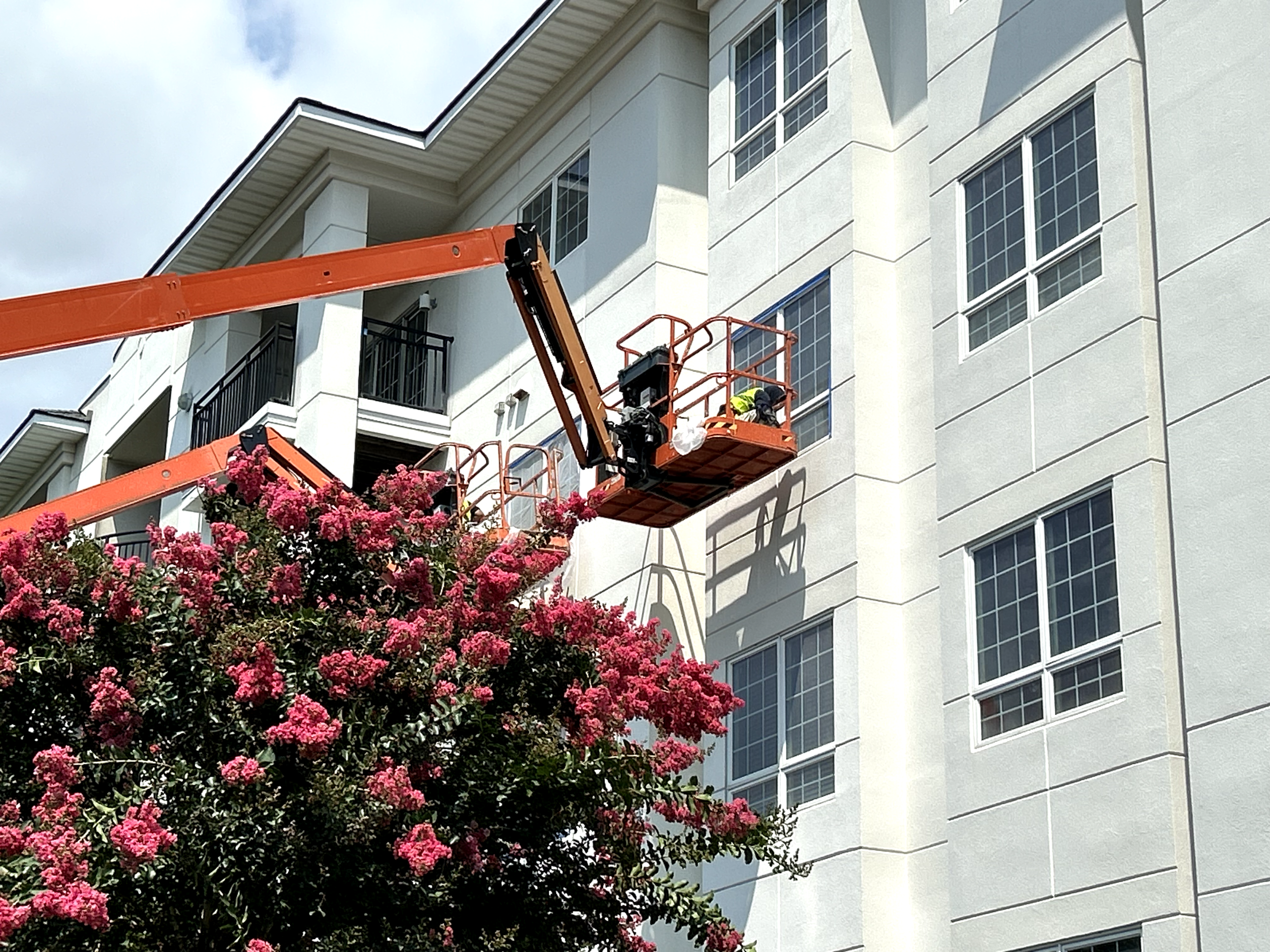
A Certificate Is Not Experience. And When It Comes to EIFS, the Difference Is Everything.
The inspection industry has convinced building owners that a piece of paper makes someone qualified to evaluate one of the most complex cladding systems in construction. It doesn’t — and your building is paying the price.
Every year, homeowners and building owners across Virginia hire EIFS inspectors to evaluate moisture damage, failed coatings, improper installation, and system failures. They do their due diligence. They check for credentials. They find someone with a certificate from a recognized body.
And then they get a report written by someone who has never once installed an inch of EIFS in their life.
This is the quiet scandal of the EIFS inspection world — and it’s costing property owners thousands of dollars in missed diagnoses, misidentified failures, and repair recommendations that don’t hold up.
The certificate problem
Obtaining an EIFS inspector certificate through organizations like EIMA or similar bodies requires passing a written exam and completing a training course. That’s it. There is no minimum field experience requirement. No installation hours. No proof that you’ve ever worked a day on an actual EIFS system.
What this creates is a class of inspectors who are genuinely knowledgeable about what the manuals say — but have zero firsthand understanding of how the system goes together, where it fails in practice, what shortcuts look like from the outside, or how a missed step in the base coat stage reveals itself three years later as a moisture intrusion pattern that doesn’t match any diagram in the textbook.
“Would you hire a certified car inspector to diagnose your engine or fix your flat tire — or would you hire an experienced mechanic?”
The answer is obvious when it’s your car. You want the person who has pulled engines, changed hundreds of tires, and felt the difference between a worn bearing and a failing CV joint with their own hands. The inspector who has only read about it might be able to tell you something is wrong. They cannot tell you why, how it happened, or exactly what it will take to fix it right.
EIFS is no different. The failure modes of EIFS are tactile, visual, and contextual in ways that no certification exam can convey. Experienced installers know what improper sealant termination looks like before the probe even touches the wall. They know which substrate conditions cause delamination. They know what a rushed lath installation pattern tells you about the general quality of the job. None of that knowledge comes from a classroom.
The myth that won’t die: “contractors can’t inspect their own work — so non-contractors must be better”
The industry has pushed a narrative for years that the ideal EIFS inspector is a neutral third party with no background in installation — specifically because a contractor might have a financial interest in finding problems. The logic sounds reasonable on the surface. In practice, it’s completely backwards.
What a certificate-only inspector actually misses
This is not theoretical. These are the categories of failure that consistently slip through inspections conducted by people with certifications but no installation experience:
-
01
Substrate preparation failures Improper surface prep is one of the most common causes of EIFS failure — and almost completely invisible once the system is applied. An experienced installer knows where to probe, how to interpret surface adhesion test results, and what the wall felt like when the problem was created.
-
02
Sealant joint and termination failures Incorrect sealant depth-to-width ratios, missed backer rod, improper transitions at windows, doors, and penetrations — these are the #1 source of moisture intrusion in EIFS systems. They require a trained eye that has done thousands of terminations to read correctly.
-
03
Mesh and base coat deficiencies Over-embedded mesh, inconsistent base coat thickness, and missed reinforcement at corners create failure points that only show up years later as cracking or water damage. An inspector who has never worked a trowel in their life cannot read these patterns reliably.
-
04
System compatibility issues Not all EIFS components are interchangeable. Mixing primers, base coats, and finish coats from different manufacturers, or applying over incompatible substrates, creates long-term adhesion failures. Only someone who has worked with these systems knows what to look for — and what questions to ask about the original installation.
-
05
The difference between cosmetic and structural failure This is perhaps the most important distinction of all — and the one that most certificate-only inspectors get wrong. Hairline cracks in finish coat are normal. The same pattern with soft foam underneath is a sign of water damage that has been developing for years. Experience is the only thing that tells these apart correctly.
What you should actually ask before hiring an EIFS inspector
Before you sign anything, ask these questions directly:
-
→
How many years did you spend installing EIFS? Not inspecting. Installing. If the answer is zero, that is a significant red flag regardless of what certificates they hold.
-
→
Can you explain the difference between barrier and drainage EIFS and how each fails? A real inspector answers this without hesitation — from experience, not a textbook recitation.
-
→
Have you personally repaired the type of failure you’re inspecting for? The best inspectors are people who have fixed these problems with their own hands. They know every failure mode because they’ve remediated it.
-
→
Who trained you — and were they an installer or an academic? The quality of an inspector’s knowledge traces directly back to the quality of their mentorship. Training from experienced field personnel is not comparable to training from a testing organization.
The goal of an EIFS inspection is not to generate a report. It’s to give you an accurate picture of your building’s condition so you can make good decisions. That requires someone who has lived this system — not just studied it.
A certificate on the wall means someone passed a test. Experience means someone has spent years on scaffolding in July heat, troubleshot failures that didn’t match any textbook case, and learned the hard lessons that only the field teaches.
When your building is at stake, know the difference.
Get an inspection from someone who has actually built what they’re evaluating.
Modern Wall Systems brings decades of hands-on installation and remediation experience to every inspection. We know what failure looks like because we’ve repaired it — and we know what good work looks like because we’ve done it.
Request an Inspection